If this message is not displayed correctly, please click here.

April 2026 Newsletter

Hi Everyone,

This month's newsletter features information on the following:

  • The Pollinator Project - schools across Ireland are invited to take part and join a nationwide movement that is reshaping school grounds into living spaces for nature and inspiring young people to play an active role in protecting biodiversity.
  • Asian Hornet (Vespa Velutina) - your help is needed in reporting this highly efficient predator of native insects which poses a serious threat to our honeybees and other pollinators. See our article below for information on what they look like and how to report a sighting.
  • Wexford Local Development/Leader Community Funding - expressions of interest are invited from community groups for funding for community projects under a number of areas. Further information and details of where to apply are provided below.
  • Dates for your Diary!  We are delighted to announce the dates for Climate Action & Biodiversity Fortnight 2026! Events will be available throughout the fortnight providing opportunities for all age groups to engage with and learn more about climate-themed topics, and sustainable actions and behaviours.  

Until next month! 

The
Climate Action Wexford Team. 

Pollinator Project now open for applications!
Closing Date: 12noon, Fri., 10th April, 2026

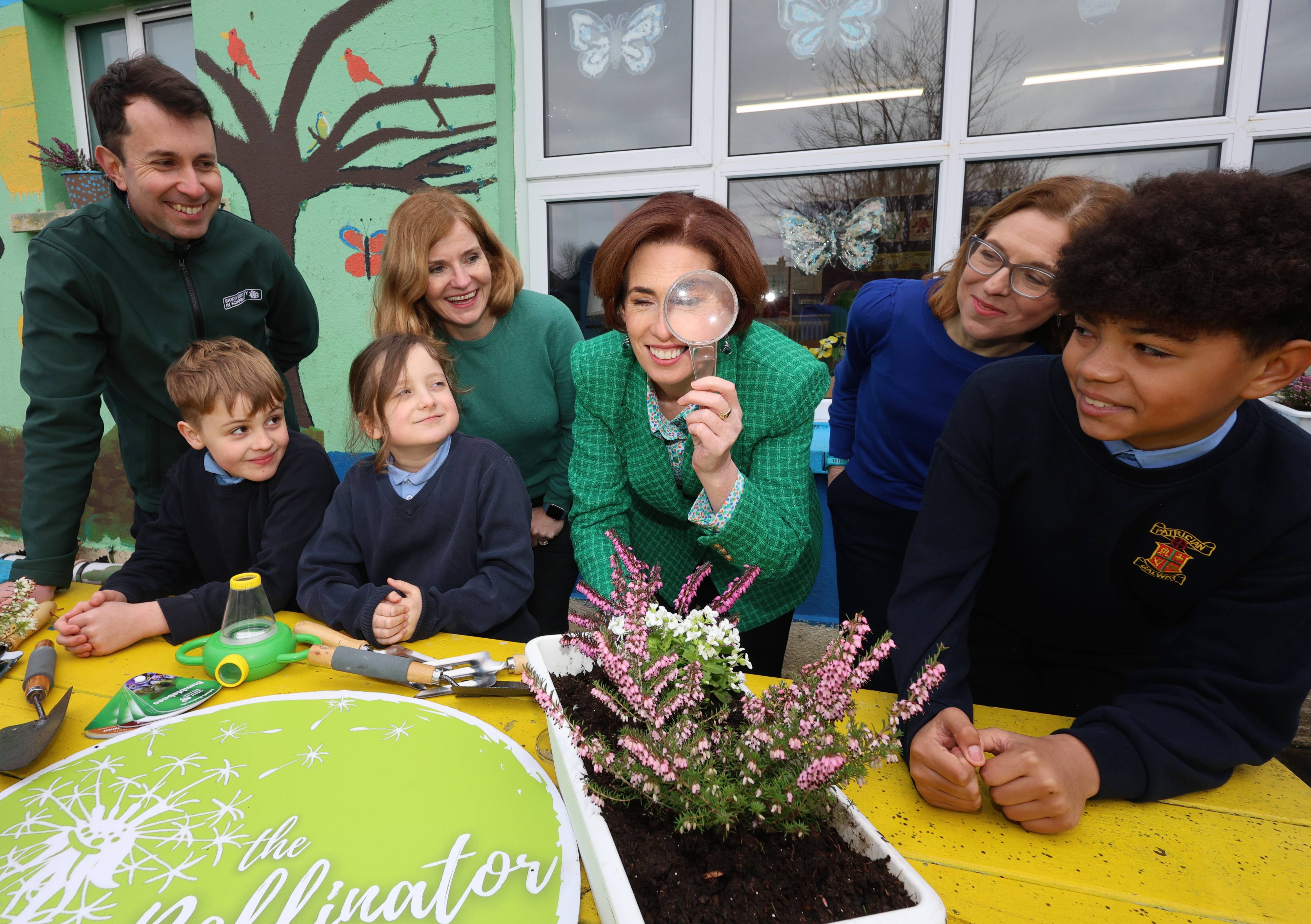
A group of people gathered around a table examining a plant

The Pollinator Project, a schools-based initiative raising awareness of the importance of pollinators and how they can be protected, was officially launched by Minister for Education and Youth, Hildegarde Naughton T.D. on March 23, 2026.

The launch took place at St. Patrick’s National School in Galway City which last year won the Pollinator Project’s Gold Bee Award, in recognition of its work to protect pollinators on its school grounds.

The project, delivered by Biodiversity in Schools, Ireland’s biodiversity education organisation for young people, in partnership with fibre broadband operator SIRO, works with schools across Ireland to train students as Pollinator Ambassadors and support them in delivering bee-positive actions such as creating ‘no-mow’ meadows and reducing the use of sprays on school grounds.

Participating schools and students receive practical supports including educational resources such as biodiversity kits and training from biodiversity experts over the course of the programme, which runs across several months during the school year.

Since 2023, the project has engaged more than 144,000 students from early years education through to primary and post-primary schools nationwide. During this time, over 16,000 students have also received specialised training to become Pollinator Ambassadors within their school communities, helping to lead biodiversity actions among their peers.

For further information & application details, please click here

The Asian hornet - have you seen this insect?

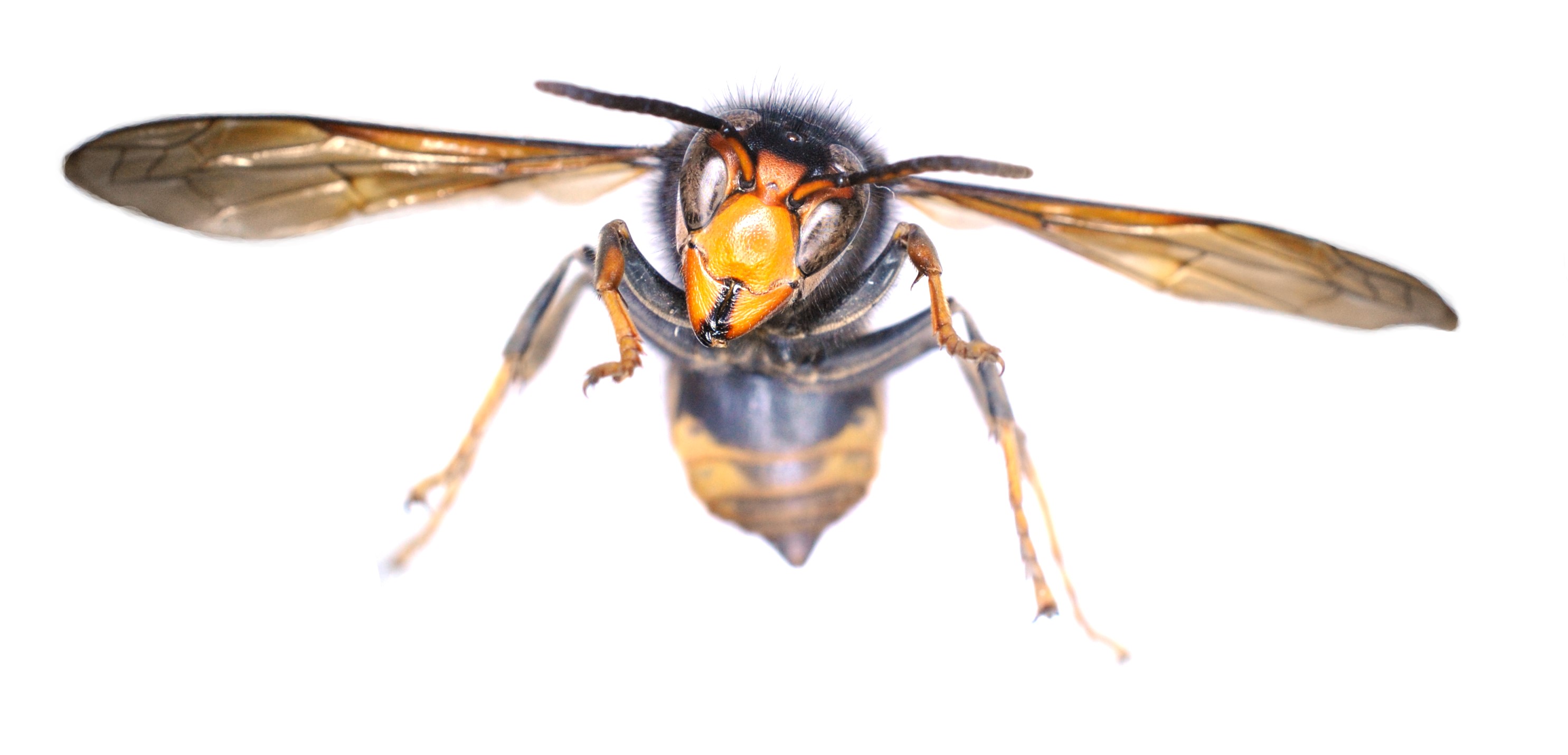
Image of an Asian hornet

Originally from Asia, this invasive species was accidentally introduced to France in 2004, where it spread rapidly into neighbouring countries. Several sightings have been confirmed from Ireland, but the species is not established here. Your help is now needed to watch and report this invasive species.

For details of how to report an Asian hornet sighting, please click here


Where might I see it?

Asian hornets might be seen visiting flowers and fruits, or near beehives. They are also attracted to roadkill, fish sold in markets and other sources of protein. You may also spot an Asian hornet nest.

What does it look like?

It is very easy to confuse an Asian hornet with other species. Many insects look very alike. To help confirm its identity and follow up on suspected sightings, you are asked to provide a photo but only if it safe for you to take one.

  • The invasive Asian hornet is usually 2-3 cm in length. The body is black with an orange-tipped tail.
  • The native giant woodwasp is frequently mistaken for Asian hornet. It is much larger at 5 cm or more. It is yellow and black in colour. This species is widespread.
  • The native common wasp is smaller than the Asian hornet at 1-2 cm long. The wasp is characteristically yellow and black.
Always Remember - never kill a native insect doing no harm.

Wexford Local Development/Leader Community Funding
Expressions of Interest deadline: 12noon, Tues., 21st April, 2026

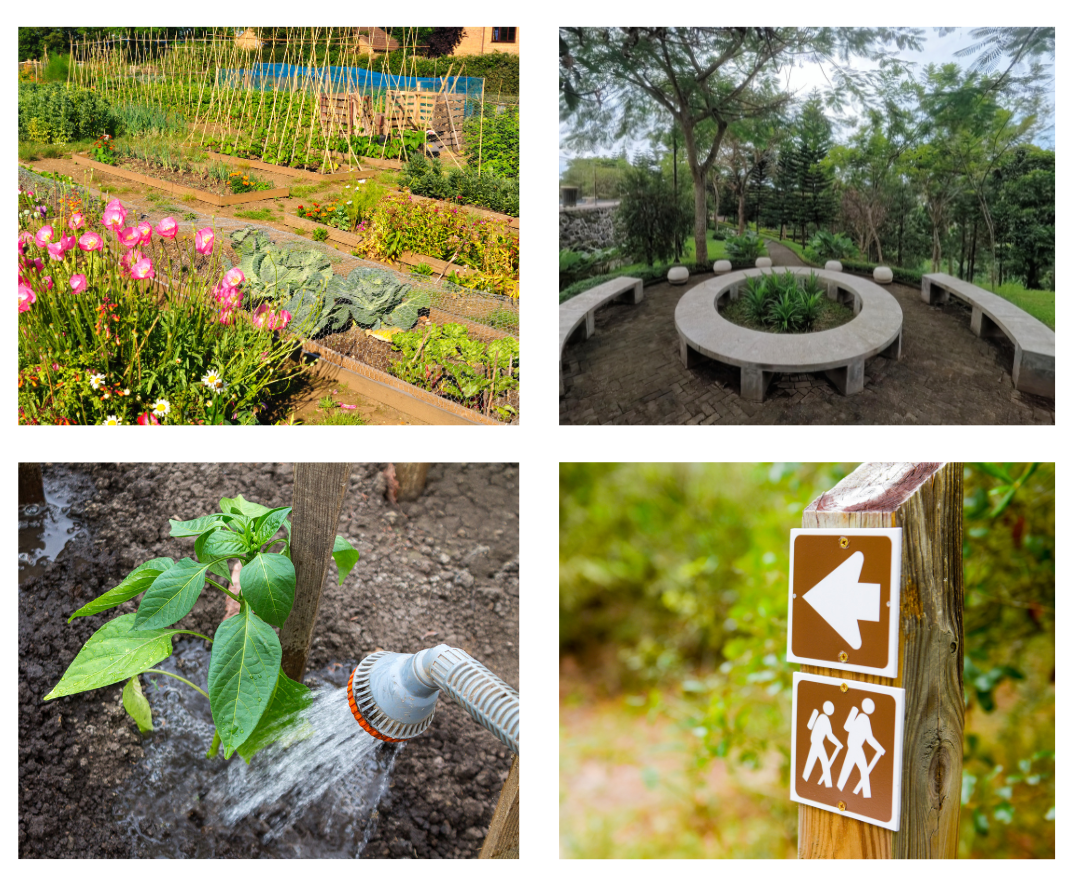
Images of garden layouts, a plant being watered and walkway signage

Wexford Local Development is inviting expressions of interest for funding from community groups. 

€370,000 is available for community projects under the following areas:

  • Development of sustainable outdoor social & recreational facilities which prioritise universal design with access for all.
  • Capital supports for biodiversity measures and environmental improvements including parks, nature corridors and community gardens.
  • Sustainable use of water resources including community training & monitoring projects, water recycling, rainwater harvesting and use of grey water.
  • Development of climate and biodiversity action plans.

Interested community groups should complete and return an Expression of Interest (EOI) form by 12 noon, Tuesday 21st April, 2026.

Further information & EOI form available from: LEADER Community Funding

Dates for your Diary!
Climate Action & Biodiversity Fortnight
(11th - 24th May, 2026)

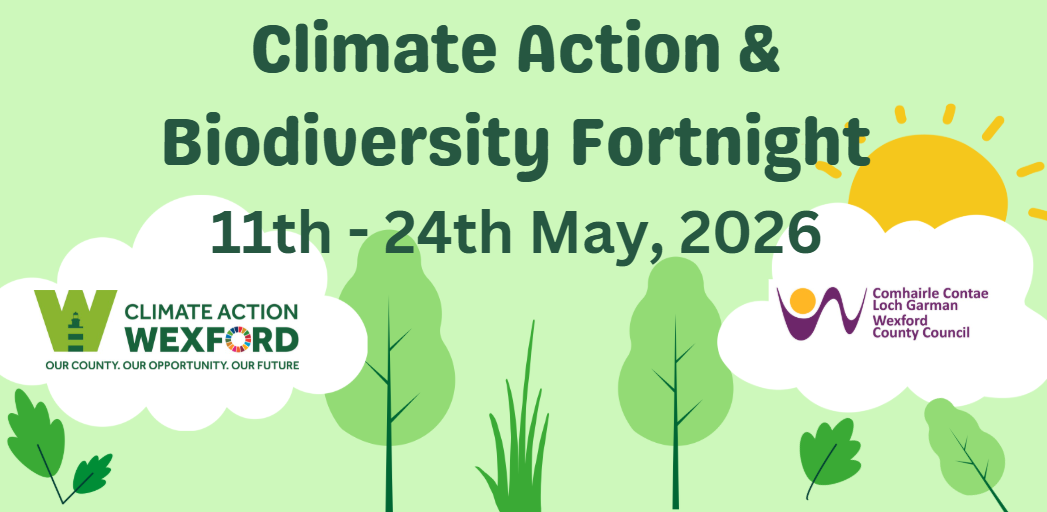
Banner for Climate Action & Biodiversity Fortnight 2026
Climate Action & Biodiversity Fortnight takes place this year from Monday, 11th May to Sunday, 24th May, 2026 incorporating Biodiversity Week and Bike Week events.

A special newsletter will issue separately and feature details of the events taking place.

All events are free to attend; however, please note that some events require advance booking.

Until next time, keep safe, well
& climate aware! ⛅

X handle Facebook Company Name Instagram Profile YouTube channel
If you don´t want to receive any more messages (to: unknown@noemail.com) any longer, you can unsubscribe free of charge at any time.
Wexford County Council
Frank Burke
County Hall
Y35 WY93 Carricklawn, Wexford
Ireland


climateaction@wexfordcoco.ie